One of the most impactful yet often overlooked home-improvement upgrades you can make is updating your countertops. They serve as the daily work surface for cooking, cleaning, and gathering, but they also function as a major visual anchor in any kitchen design. Because of that dual role, countertop choices often set the tone for the entire space.
Looking ahead to 2026, countertop trends reveal a compelling blend of elegance, sustainability, and practical innovation. Homeowners and designers are moving toward materials that perform well under everyday use while offering distinctive visual character. At the same time, there is a clear shift toward warmer tones, tactile finishes, and thoughtful design details.
Here’s a closer look at what’s trending and how you can make smart, stylish choices for your own kitchen.
1. Materials That Matter
Material innovation continues to shape the countertop market, with both natural and engineered surfaces gaining attention for new reasons.
Retro-inspired surfaces are making a comeback, bringing playful texture and visual interest back into kitchens. Surfaces with colorful flecks, terrazzo-style chips, and layered patterns are appearing in both modern and vintage-inspired designs. These materials offer personality while maintaining durability.
Natural quartzite remains a favorite among designers who want the beauty of natural stone combined with impressive strength. Quartzite offers the look of marble but with greater resistance to scratching and etching, making it a practical choice for high-use kitchens.
Engineered stone is also evolving. Manufacturers are producing slabs that incorporate recycled materials and environmentally responsible fabrication processes. These surfaces often provide excellent stain resistance, durability, and consistent patterning while supporting sustainability goals.
Performance has become a key decision factor. Homeowners are prioritizing surfaces that require less maintenance and offer better protection against stains, scratches, and heat. Materials that combine durability with environmentally conscious production are expected to lead the market throughout 2026 and beyond.
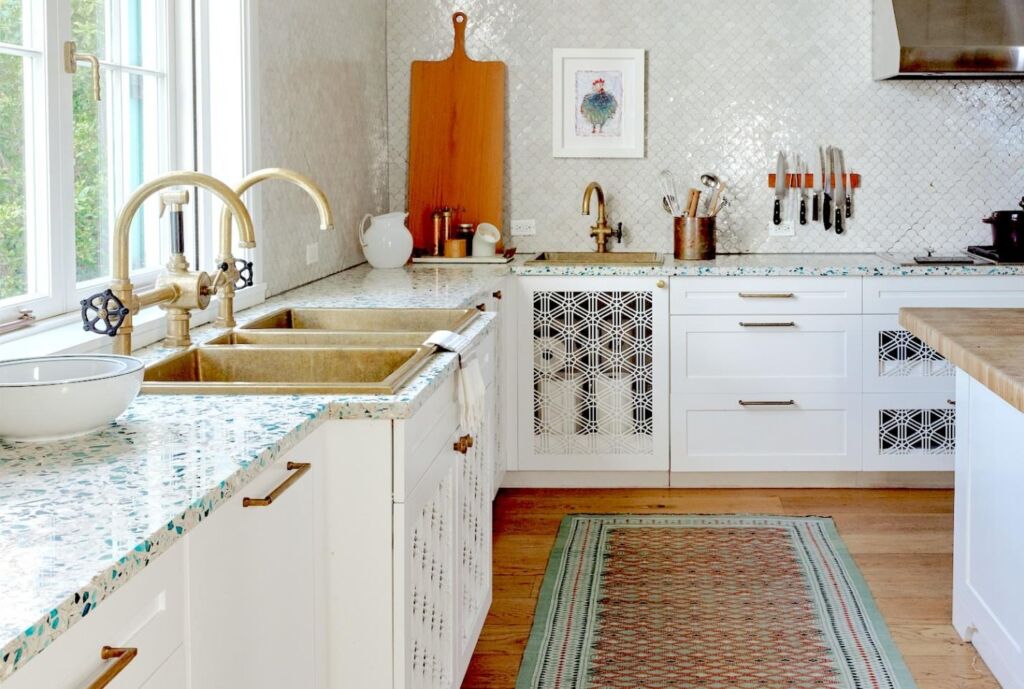
Photo courtesy of Vetrazzo
2. Color, Tone, and Finish Trends
For several years, cool greys and stark white countertops dominated kitchen design. In 2026, the palette is warming up.
Soft, earthy neutrals are becoming the foundation of many kitchens. Shades such as taupe, sand, cream, and soft camel create a welcoming atmosphere while pairing beautifully with natural materials. These tones complement wood cabinetry, brass fixtures, and matte black accents, creating layered and balanced spaces.
At the same time, bold color statements are beginning to emerge. Designers are incorporating deeper tones such as forest green, moss, and burgundy-veined stone to create focal points within kitchens. These colors often appear on islands or statement counters where they can stand out without overwhelming the room.
Finish also plays a larger role than ever before. High-gloss polished surfaces are no longer the default choice. Instead, matte, honed, and leathered finishes are gaining popularity for their subtle texture and softer appearance. These finishes reduce glare, highlight natural stone patterns, and add a tactile quality that makes countertops feel more organic and inviting.
3. Form, Edges, and Design Details
Countertops are increasingly being treated as sculptural elements rather than simple horizontal surfaces.
Edge profiles, once an afterthought, now contribute significantly to the overall design. Curved edges, beveled cuts, and framed profiles can introduce subtle elegance or modern sharpness, depending on the kitchen’s style. These details help elevate a countertop from a functional surface to an intentional design feature.
Another trend gaining momentum is the use of thinner slabs. Two-centimeter stone slabs are becoming more common, particularly in contemporary kitchens. Their slimmer appearance creates cleaner lines and a lighter visual footprint, especially when paired with sleek cabinetry and minimal hardware.
Mixed materials are also becoming more popular. Designers are intentionally using different countertop materials within the same kitchen. For example, an island might feature a dramatic stone slab while the perimeter counters incorporate wood or another complementary surface. This approach allows homeowners to combine aesthetics with functionality, using each material where it performs best.
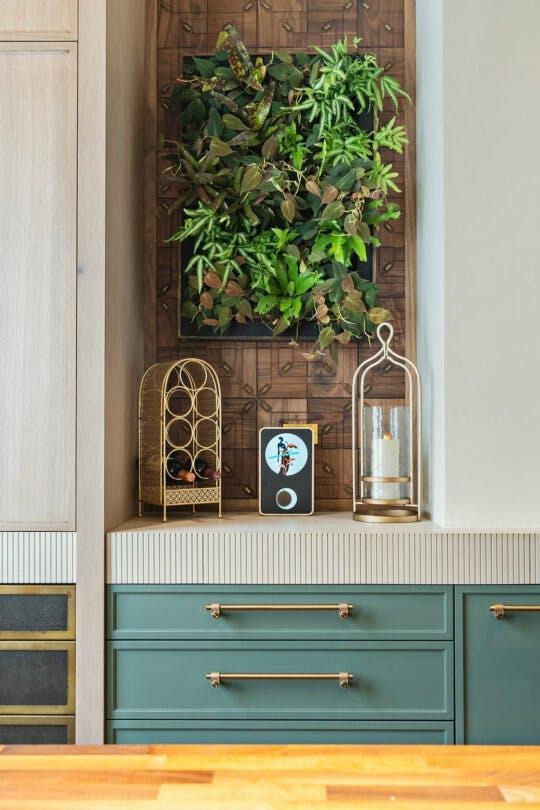
Photo courtesy of Cosentino
4. Integration and Sustainability
Sustainability has moved from a niche concern to a major design priority.
Many countertop manufacturers are responding by offering slabs made from recycled content or materials produced using low-emission processes. Low-VOC sealants and adhesives are also becoming more common as homeowners look for healthier indoor environments.
Beyond material composition, fabrication methods are improving as well. Advances in cutting and installation techniques allow for more efficient use of stone and fewer material offcuts.
Another defining trend for 2026 is seamless integration. Designers are creating kitchens where countertops flow directly into backsplashes, eliminating visual interruptions and creating a more cohesive appearance. Full-height slab backsplashes are replacing traditional tile in many high-end kitchens.
Waterfall edges remain a popular design choice for islands. In this approach, the countertop material continues vertically down the sides of the cabinetry, creating a striking architectural effect that emphasizes the natural beauty of the slab.
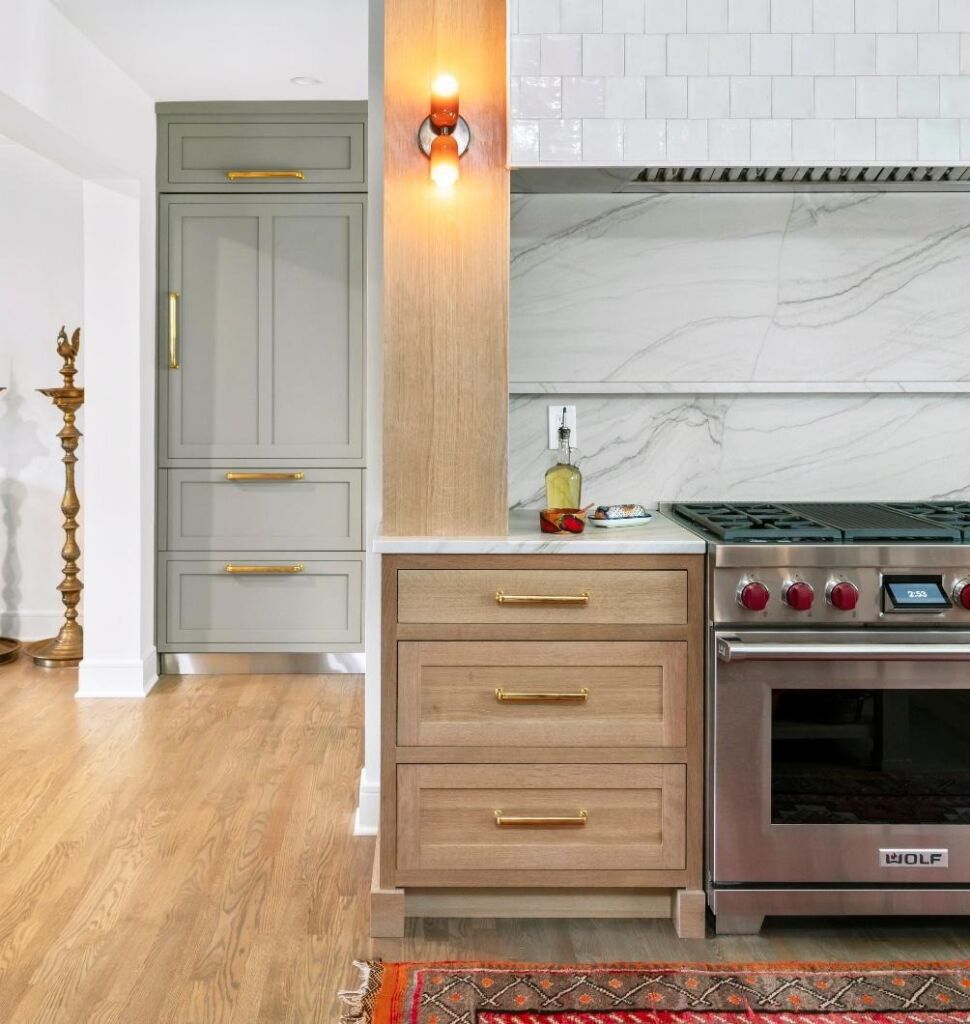
Photo courtesy of Noah & Lily Kitchen Design
5. What’s Falling Out of Style
As new trends emerge, some older countertop styles are beginning to feel dated.
Busy granite patterns, particularly those with heavy brown or gold undertones, are appearing less frequently in modern kitchens. While granite itself remains durable and functional, the visual styles popular in the early 2000s are giving way to cleaner, more contemporary patterns.
Uniform builder-grade white quartz is also starting to feel overly plain in some designs. Today’s trends favor surfaces with subtle veining, texture, or color variation that adds visual depth and character.
Backsplash design is evolving as well. Traditional subway tile paired with a highly contrasting countertop is gradually being replaced by larger slab backsplashes or continuous surfaces that extend from the counter to the cabinets above.
Final Thoughts
Updating your countertops in 2026 is less about chasing flashy trends and more about making thoughtful design decisions that balance style, durability, and sustainability. The best choices will combine practical performance with distinctive character, creating surfaces that support everyday living while elevating your kitchen’s overall design.
With the growing range of materials, finishes, and design options available, homeowners now have more freedom than ever to create countertops that feel both timeless and uniquely personal.
If you’re considering a countertop upgrade this year, the team at Suburban Marble & Granite can help bring your vision to life. From helping you choose the right material to expertly fabricating and installing your new surfaces, we’re here to guide you through every step of the process. Contact us today to start planning your next kitchen upgrade.
